



Choosing a Video Production partner in New Orleans.

Choosing among New Orleans production companies is easier when you know what kind of story you need to tell, how complex the shoot will be, and which services must happen under one roof. The city has options for commercial campaigns, corporate videos, branded documentaries, music videos, narrative projects, and full-scale film production. This guide explains how to compare creative fit, production support, local knowledge, equipment, post-production, and the broader Louisiana film industry before you hire.
What should you look for in a New Orleans production company?
Look for a company that can match your project’s goals, manage the process clearly, and shows proof that it can deliver the level of polish you need. The strongest fit is not always the largest studio or the most cinematic reel; it is the team that understands your audience, your timeline, your budget range, and the practical demands of filming in New Orleans.
For a brand video, that may mean a partner with strong scripting, interview direction, lighting, editing, and motion graphics. For a music video or short film, it may mean a company with a more distinctive visual voice, deep cultural awareness, and a flexible crew model. For larger film production New Orleans projects, it may mean a team that can help coordinate permits, vendors, locations, crew, equipment, and post-production workflows.

The best choice depends on the project type
Different production companies New Orleans clients consider will often have overlapping services, but their strengths can vary sharply. A company that excels at corporate interviews may not be the right match for a stylized music video. A boutique creative studio may be ideal for a concept-driven piece but less suited to a multi-day event capture with fast turnaround.
When comparing video production companies New Orleans businesses can hire, start by placing your project into one of these practical categories:
Commercial or branded content: Prioritize concept development, casting support, art direction, camera quality, editing, color, sound, and campaign-ready deliverables.
Corporate video: Look for interview experience, messaging support, brand consistency, clear scheduling, and comfort working with executives or internal teams.
Event video: Ask about multi-camera coverage, audio capture, live logistics, backup gear, and delivery timelines.
Music video: Focus on visual style, collaboration with artists, location creativity, editing rhythm, and cultural fluency.
Documentary or narrative film: Evaluate story development, producing experience, crew depth, location management, and long-form post-production.
Social-first video: Make sure the team understands vertical formats, short edits, captions, platform pacing, and versioning.
This early sorting step keeps you from comparing companies on the wrong criteria. A beautiful reel matters, but only if the work reflects the kind of piece you actually need.
Full-service production reduces friction
Many clients benefit from a full-service partner because video projects involve more than filming. Pre-production shapes the concept, schedule, locations, script, interview questions, shot list, crew plan, and budget. Production brings the plan to life on set. Post-production turns the raw material into a finished piece through editing, color correction, sound mix, graphics, revisions, and final exports.
Some New Orleans video production companies position themselves as end-to-end creative partners. That kind of integrated model can be helpful when you need creative development and execution in the same conversation. Instead of hiring a writer, separate crew, editor, audio specialist, and finishing team independently, you can work with one production lead who keeps the story, visuals, and delivery requirements aligned.

Local expertise matters in New Orleans
New Orleans is visually rich, but it is also logistically specific. Weather, street activity, historic locations, neighborhood context, event calendars, sound conditions, and permitting can all affect a shoot. Local production knowledge helps keep the creative plan realistic and protects the schedule from avoidable surprises.
For out-of-town brands, agencies, or filmmakers, this is one of the biggest advantages of hiring film production companies in New Orleans rather than bringing in an entirely external team. A local producer may know which locations have the right look, which areas are practical for crew parking, when a street will be too loud for clean audio, and how to build a schedule around the city’s pace.
Local knowledge also matters creatively. New Orleans is not just a backdrop. Its music, food, architecture, neighborhoods, and traditions carry meaning. Strong New Orleans video production should treat that texture with respect instead of using the city as a generic scenic setting.
How do pricing, gear, and transparency affect your decision?
Pricing, gear, and transparency affect your decision because they reveal how prepared a company is to scope the work before problems appear. A clear proposal should explain what is included, what may cost extra, how revisions work, what crew and equipment are planned, and how the final deliverables will be prepared.
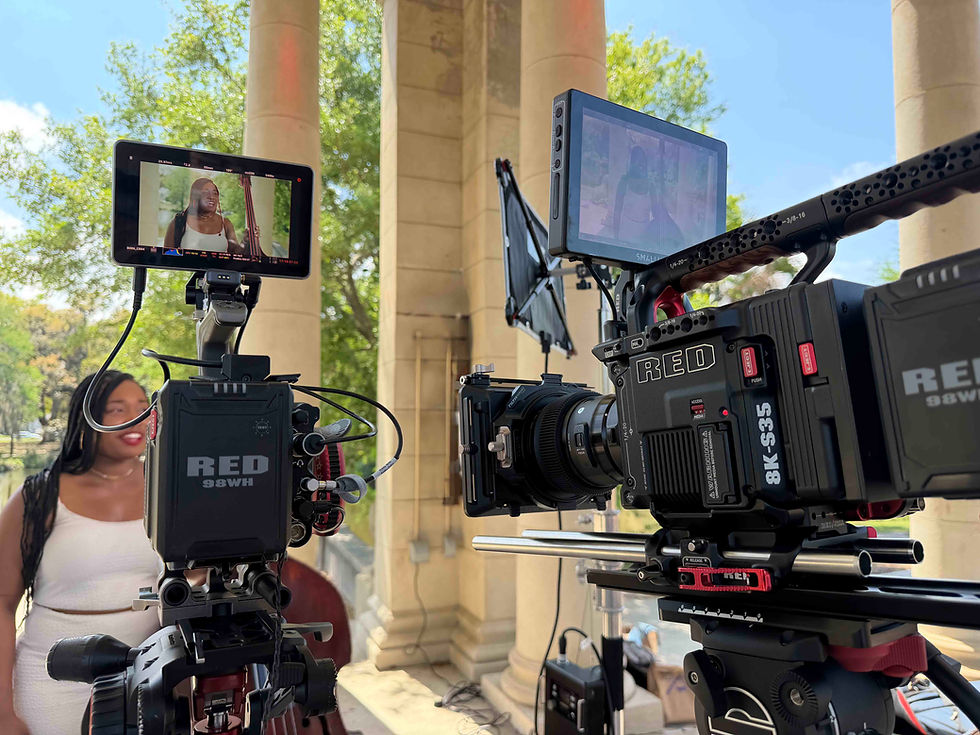
Video Productions USA, for instance, promotes an interactive pricing tool for instant estimates on commercial, corporate, and event videos in New Orleans. Its site also notes a RED V-Raptor camera package included with its commercial production service, which is the kind of equipment detail clients may want to understand before comparing bids. (videoproductionsusa.com)
Still, equipment should not be the only deciding factor. A high-end camera does not fix weak planning, unclear messaging, poor audio, or rushed editing. Ask how the gear supports your goals. A simple testimonial video may need excellent lighting and clean sound more than an elaborate cinema package, while a commercial may benefit from more robust camera, lens, lighting, grip, and color workflows.
Before approving a quote, clarify:
Scope: How many shoot days, edit rounds, locations, deliverables, and crew members are included?
Creative development: Is scripting, storyboarding, or interview planning part of the estimate?
Production logistics: Who handles permits, location coordination, releases, parking, meals, and call sheets?
Post-production: Does the quote include editing, color, sound, music licensing, graphics, captions, and multiple aspect ratios?
Usage needs: Will the final video be used for web, broadcast, paid ads, internal training, festivals, or social platforms?
Ownership and licensing: What rights do you receive for footage, music, graphics, and final masters?
When reviewing portfolios, do not simply ask, “Does this look good?” Ask sharper questions: Does the pacing match the audience? Does the lighting suit the emotion? Do the interviews feel natural? Does the edit build momentum? Does the company understand the difference between a brand message and a sales pitch?
A simple decision guide for comparing companies
Once you have a shortlist, use a consistent process so the most persuasive reel does not automatically win. The right partner should make you feel confident before production begins, not only after you see the final cut.
Use this checklist during discovery calls:
Share your objective in one sentence. If the company cannot reflect it back clearly, the creative direction may drift.
Ask for relevant examples. A food commercial, healthcare testimonial, music video, and nonprofit documentary all require different instincts.
Discuss the audience. A video for donors, tourists, recruits, fans, and internal employees should not be shaped the same way.
Request a production approach. The company should explain how it would move from concept to shoot to edit.
Listen for questions. Strong producers ask about goals, constraints, approvals, locations, brand rules, and distribution.
Review revision terms. Clear feedback rounds prevent frustration late in the edit.
Confirm deliverables. Ask about formats, lengths, captions, thumbnails, raw footage, and social cutdowns.
This process helps you compare strategy, communication, and production discipline, not just visual style.
The Louisiana film industry shapes local opportunities
The Louisiana film industry gives New Orleans a deeper production ecosystem than many cities of similar size. The state’s Motion Picture Production Program offers eligible productions tax credits on qualified in-state production expenditures, with Louisiana Entertainment listing a base credit, possible increases for qualifying productions, and specific rules for items such as VFX and Louisiana payroll. (louisianaentertainment.gov)
For larger productions, incentives can influence budgeting, vendor choices, crew hiring, and whether post-production services happen in-state. For smaller commercial or corporate clients, the incentive program may not be directly relevant, but the ecosystem still matters. A city with experienced crews, rental networks, post-production talent, and production-friendly infrastructure gives clients more options when a project grows in complexity.
If your project may qualify for incentives, do not rely on a casual summary. Speak with a qualified production accountant, entertainment attorney, or official program representative before making budget decisions.
Portfolio proof is stronger than promises
A production company’s website should make it easy to evaluate past work. Look for finished videos, not only behind-the-scenes photos. If the company works across industries, see whether the quality holds steady across different budgets and formats.
Reviews, client references, case studies, and recognizable work can all help, but relevance matters most. A national brand logo may be impressive, yet a smaller project similar to yours may tell you more about how the company will handle your needs. If a company claims strategy as a strength, its portfolio should show more than attractive images; it should show clear messaging, emotional structure, and purposeful editing.
Good proof often includes:
A reel plus full-length project samples
Examples in your industry or format
Before-and-after context, such as the goal and distribution channel
Clear credits showing what the company actually handled
Testimonials or references that speak to process, not just final visuals
The right partner makes the process feel clearer
Hiring among video production companies New Orleans search results can feel overwhelming because many teams use similar language. The way through is to define the project first, then compare companies by fit: service model, creative style, local expertise, communication, budget clarity, and post-production depth.
New Orleans offers production partners for polished brand campaigns, corporate storytelling, music-driven visuals, documentaries, and larger film work. Choose the company that understands both the story you want to tell and the realities of making it happen in this city. A strong production partner will not just capture footage; it will help shape an idea into a finished piece that feels intentional, practical, and worth watching.


Comments